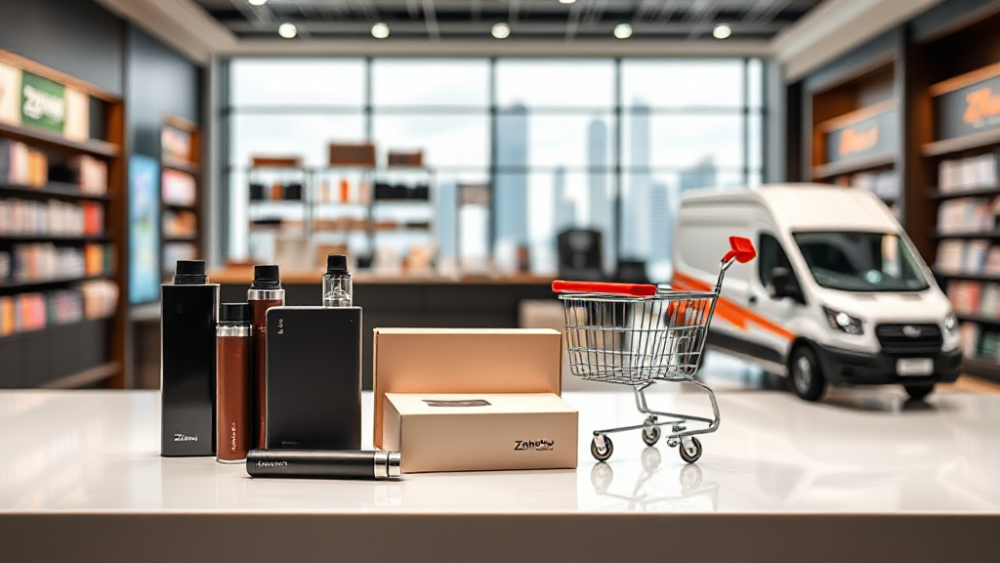
Why 25K Disposables Like MARBO Became a Retail Category
Puff counts have been climbing for years, but something shifted recently. What used to be a spec-sheet bragging right has become a genuine retail tier. Devices like the snowwolf 16k helped normalize four-figure puff ratings, and now 25,000 puffs marks a distinct category that shoppers actively search for by name. That is not just a marketing milestone. It is a signal about how disposable vape buyers in Singapore and similar markets now evaluate value, convenience, and staying power.
This piece looks at the category through a retail lens: why 25K devices emerged, what demand drivers pushed them into the mainstream, how online stores have adapted their shelves and messaging, and why delivery and cash on delivery have become inseparable from the story. It is a trend read, not a product manual.
The Climb From 16K to 25K: How a Spec Became a Shelf
Disposable vapes were once judged on flavor and form factor. Puff count was a secondary detail, often inflated and rarely verified. Over time, buyers got smarter. They started comparing puff ratings the way phone shoppers compare battery life, and retailers responded by organizing listings around those numbers. The snowwolf 16k sits at an interesting midpoint in that evolution: high enough to signal longevity, modest enough to keep the device compact. It helped prove that a four-figure puff count could be a mainstream expectation rather than a premium novelty.
From there, the ladder kept extending. 9K, 12K, 20K, and eventually 25K. Each step was not just bigger; it was a repositioning of what a disposable could be. A 25K device is no longer a casual backup. It is a primary device for many users, which changes how retailers merchandise it, price it, and ship it.
The category also gained recognizable names. The marbo vape 25k became one of the clearest examples of a product that shoppers ask for by model rather than by brand alone. That kind of name recognition is the hallmark of a true retail category rather than a passing trend.
Demand Drivers: Why Buyers Gravitate to Higher Puff Counts
Several forces pushed 25K devices into demand. The first is straightforward economics. When a device lasts longer, the cost per puff drops, and buyers who vape regularly notice. In markets where ordering online is the norm, a longer-lasting device also means fewer reorders and less waiting on deliveries. That convenience compounds.
The second driver is trust in the format. Early high-puff devices felt bulky or unreliable. Current 25K models are slimmer, better sealed, and more consistent. Products like the lana pix 20k showed that a high puff count could coexist with a pocket-friendly design, which made the jump to 25K feel like a natural upgrade rather than a compromise.
The third driver is flavor stability. Longer-lasting devices tend to hold flavor better over their lifespan, and that matters to repeat buyers. A device that tastes good on day one but fades by day five does not earn loyalty. A 25K device that stays consistent becomes a default choice.
Finally, there is the social proof factor. When a category gets enough attention, buyers start searching for it directly. They compare the marbo 25k against alternatives, read reviews, and ask retailers which model is actually worth it. That search behavior is what turns a spec into a shelf.
How Online Retailers Respond: Shelves, Bundles, and Naming
Retailers do not just stock what sells. They shape how it sells. Once 25K devices proved they could move, online stores began restructuring their catalogs. High-puff devices moved to prominent positions, often grouped by puff tier rather than by brand. This makes comparison easier for shoppers who already know they want a 25K device and just need to pick a flavor.
Naming conventions also adapted. Models like the lana pix and the lana ultra 2 are marketed with puff counts baked into the identity. That is not accidental. It helps buyers self-select and reduces the back-and-forth that slows down online purchases.
Retailers also use bundles and tiered pricing to make higher-puff devices feel like better value. A single 25K device may cost more upfront than a 9K device, but when the per-puff math is shown clearly, the higher tier often wins. Stores that explain this well tend to convert better, especially among repeat customers.
Another response is inventory depth. Carrying a 25K category means carrying multiple flavors and multiple brands, because buyers in this tier tend to be loyal to a specific taste profile. A store that only stocks one or two options will lose customers to competitors who offer more choice.
Delivery and Cash on Delivery: The Infrastructure Behind the Category
A 25K device is a bigger purchase than a starter disposable, and that changes buyer behavior. People want faster delivery, clearer tracking, and payment options that feel safe. In Singapore, cash on delivery has become a meaningful part of the online vape retail experience because it removes the friction of prepayment and lets buyers inspect the package before committing.
Discreet packaging matters too. Buyers who order higher-tier devices often care about privacy, and retailers that prioritize discreet shipping earn trust. That trust is what keeps a customer coming back when they need a replacement or want to try a new flavor.
Delivery speed is the other half of the equation. A 25K device is often a primary device, so waiting a week for delivery is not acceptable. Stores that offer same-day or next-day delivery in dense urban markets have an advantage, and that advantage compounds as the category grows.
This is also where adjacent product lines matter. A store that stocks high-puff disposables alongside other popular formats, such as terea singapore options, can serve a wider range of adult customers without fragmenting its logistics. The category benefits from being part of a broader, well-organized catalog.
What the 25K Tier Signals About Buyer Behavior
The 25K tier tells us that disposable vape buyers are becoming more deliberate. They are not just grabbing whatever is cheapest. They are comparing specs, reading reviews, and choosing devices that fit their usage patterns. That is the behavior of a maturing market.
It also signals that buyers are willing to pay more for longevity and reliability, provided the value is clear. A device like the lana pen plus 9k still has a place for lighter users or people who want to try a flavor before committing. But the 25K tier is where the heavy users live, and that is where retailers are focusing their inventory and marketing.
Another signal is brand loyalty within the tier. Once a buyer finds a 25K device they like, they tend to stick with it. That makes the category less volatile than the entry-level disposable market, where buyers frequently switch. For retailers, that means the 25K tier is not just a sales opportunity; it is a retention opportunity.
Finally, the tier signals that puff count is no longer the only differentiator. Flavor quality, device feel, and delivery experience all matter. Retailers that treat 25K devices as a complete customer experience, rather than just a spec, are the ones that will lead the category.
The Forward View: Where the Category Goes Next
If the past few years are any indication, puff counts will keep climbing. But the more interesting shift is not the number. It is the infrastructure around it. The 25K tier has forced online retailers to get better at logistics, payment flexibility, and catalog design. Those improvements will outlast any single device model.
We are also likely to see more differentiation within the tier. Instead of one generic 25K category, buyers may start choosing between 25K devices optimized for flavor, battery life, or form factor. That kind of segmentation is a sign of a healthy, competitive market.
For adult buyers in Singapore and similar markets, the practical takeaway is simple: the 25K tier is now a legitimate choice, not a gimmick. It offers longer use, fewer reorders, and a better cost-per-puff for regular users. For retailers, the takeaway is equally clear: stocking the tier is not enough. You need the delivery speed, payment options, and discreet packaging that make the tier worth buying from you.
The category is still evolving, but its direction is set. Higher puff counts are here to stay, and the retailers that treat them as a full retail experience rather than a spec will be the ones customers return to.